

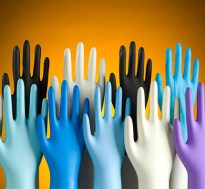
 There are four primary types of disposable gloves: latex, nitrile, neoprene/chloroprene, and vinyl. What are the different materials and characteristics of these gloves? Read on to find out.
Latex
Latex is a natural rubber sap that is secreted by rubber trees; when their bark is cut, the rubber sap is used to repair and heal the bark. Over the years, scientists have created formulas to achieve disposable gloves with premium strength, elasticity, tactile sensitivity, and durability. Due to the variety of proteins found in natural rubber, some users may experience skin irritation and allergic reactions, which can also affect other people these gloves come in contact with during use.
 The natural rubber latex gloves are made from gives them their stretchability. Gloves made from latex are comfortable and will conform to the shape of your hands. Latex gloves are an excellent choice for your comfort and protection needs.
Nitrile
Nitrile butadiene rubber (nitrile for short) is a synthetic rubber that does not contain latex proteins and is generally resistant to oil, fuel, and other chemicals.
 Nitrile gloves are more puncture resistant and stronger than natural rubber gloves but are not as strong as neoprene. Nitrile gloves are similar to latex gloves and can be a comparable option for those that have latex allergies. Nitrile gloves provide flexible and tactile wear while generally molding well to hands to provide a tight, second skin fit.
Neoprene/Chloroprene
Neoprene/chloroprene is an organic compound and a type of synthetic rubber that, like nitrile, does not contain latex proteins. These gloves alleviate the potential for adverse reactions associated with proteins in natural rubber latex.
Chloroprene gloves are best known for their resistance to a variety of acids, chemicals, and other harsh substances. Because they are made from neoprene, they maintain their flexibility even when working with a wide range of temperatures.
Vinyl
Vinyl gloves are latex-free gloves that come in both thin and thick sizes. They do not stretch and are less comfortable than latex, but still provide better tactile sensitivity than neoprene. Vinyl gloves are ideal for quick usage but are not great for working with hazardous materials.
Other Considerations
Another option with some disposable gloves is to purchase them with or without powder, which can make it easier to slip gloves on but isn’t the best choice for all applications. For example, powdered gloves should not be used in food preparation.
Though disposable gloves are helpful with many different tasks, they are not suited to all kinds of uses, and the materials they are made from are not always biodegradable. While natural rubber latex does degrade, gloves made from man-made materials like vinyl and nitrile take up space in landfills for a very long time.
 Contamination can be spread through a variety of ways, including through the air (think tiny infectious droplets spread by coughs and sneezes), water, food, touching unclean surfaces, etc. Workers who don’t correctly follow procedures can cause cross-contamination, thereby halting production, having to decontaminate or discard products, needing to clean equipment, and other effects that result in lost time and money.
 Companies minimize workplace contamination by developing, implementing, and enforcing proper processes and procedures (including disinfection and cleaning procedures), having necessary infrastructure and equipment, and the like. Personal protective equipment (PPE) is also an important consideration. By wearing shoe covers, hair nets, face masks, beard covers, and gloves, potential contaminants should be kept away from critical areas. The PPE will also help keep the work environment clean and sanitary.
 Procedures, like wearing personal protective equipment (PPE), help maintain the clean and hygienic manufacturing area and reduce the risk of contamination. Garments such as smocks, hair nets, beard covers,
  entering critical environments and manufacturing areas. Oftentimes

 This revolutionary product is essential in the reduction of spreading all pathogens that travel on the soles of footwear and cause contamination and infections. By adding HealthySole to an existing infection control program (such as booties or dedicated shoes), the facility will decrease the overall microbial load starting with shoe and floor contamination. Further, it will add a significant active layer of defense that reduces the rate of airborne, horizontal and cross contamination and does not incur additional labor costs. Lowering the overall microbial burden in a healthcare facility can lead to a decrease in HAIs. Facilities that have positive performance standards by lowering HAIs will reduce the additional treatment cost that is otherwise passed to them, shorten length of stay for patients, and save lives.
 ty headlines
 potential health hazard in the food industry. New shoe covers are clean and will keep any outside contaminants contained inside the covers, thereby preventing them from being introduced into food products.
 and falls. Some
  from entering for reasons such as hygiene, food safety, product purity, testing results integrity, etc. Why would “dirty” industries (like your stereotypical manufacturing that is oily/greasy/otherwise messy) use them? The reason is that when employees or anyone else who has been in the dirty area comes into the clean office space for lunch, a quick meeting, or to exit the facility, they put on shoe covers in order to keep the area clean and to prolong the life of expensive flooring. A
  reducing the risk of injuring themselves while putting shoe covers on and taking them off. Instead of bouncing around while attempting to balance on one foot and lifting the other leg, which we have dubbed the “bootie hop” (see
  Putting shoe covers on and taking them off by hand is dirty business.
  premium. Gowning benches and chairs take up space and can be obstructions. Shoe cover dispensers and removers take up much less space, especially proportionately when factoring in how much more efficient they are in facilitating people getting through the process. Fewer benches and chairs mean more space for other necessities.
 Manually putting shoe covers on and taking them off is so old school. While there will always be a place for doing certain things the old-fashioned way, why not look professional and impress your customers, visitors, regulators, inspectors and auditors? In fact, you can
  covers, you don’t think much about it — you just do what you’ve always done, sitting on a bench or balancing on one leg while trying to put a shoe cover on the other foot (what we call the